Quick answer
Build another tower when you need coverage or a missing capability. Upgrade when the right tower already covers the threatened route but needs more power or useful abilities.
Before spending, name the problem: enemies are escaping untouched, surviving sustained attacks, overwhelming your blockers, or disabling your defenses. Choose the purchase that addresses that problem—not simply the most expensive button.
The examples below use Kingdom Rush 5: Alliance. The Dragon Hatchery belongs to its Dragon Wars DLC, so the numerical example assumes you already have access to that content. You do not need to buy it to use the decision process. Ironhide describes Dragon Wars as a high-difficulty campaign, not an introductory experience. (en.kingdomrushalliance.com)
Evidence checked: October 6, 2026. Prices come from published developer balance notes. Comparisons are calculations and suggested decision rules, not tested walkthroughs or promises of completing a particular map.
1. Identify what the next purchase must fix
Before opening a tower menu, finish this sentence:
“The next wave threatens my defense because…”
Choose the closest explanation:
| Problem to investigate | Purchase to consider first |
|---|---|
| An important route lacks suitable coverage | A new tower in a useful position |
| Enemies survive while your tower keeps attacking | An upgrade or a better-matched damage option |
| Your defense cannot handle a particular enemy behavior | A tower or ability that supplies the missing capability |
| One disabled position leaves you helpless | A separate defensive position |
| The next wave’s threat is unclear | Inspect its information before committing your budget |
Treat this table as a starting point, not an automatic purchase order. A new tower is not necessarily useful just because an empty building spot exists. An upgrade is not necessarily useful just because you can afford it.
Alliance’s Dragon Wars enemies illustrate why diagnosis matters. Ironhide identifies Shadelings as unblockable and recommends slowing them with the Dragon Hatchery rather than relying on barracks. Against that particular threat, buying more blocking units addresses the wrong problem. (en.kingdomrushalliance.com)
Practical check: Write down the enemy or route that concerns you. If you cannot explain how the proposed purchase helps against it, inspect another option before spending.
2. Check coverage before comparing damage
Start with positions, then prices.
For each threatened route, ask:
- Can the proposed tower affect the relevant enemies?
- Does its displayed range reach the section where you need help?
- Will it contribute before enemies approach the exit?
- Does it cover a new weakness, or duplicate coverage that is already adequate?
An empty slot can be tempting because building there makes the map look more defended. Instead, give every new position a job: protect a separate lane, support your main fighting area, or catch survivors farther along the route.
Similarly, do not upgrade a position merely because it was your first purchase. Ask whether that position still matters for the next wave.
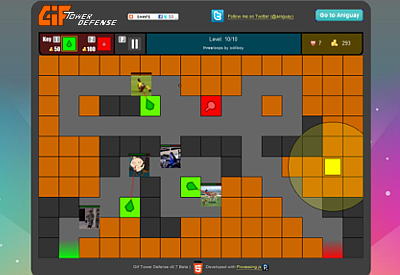
A useful way to compare two sites is to trace the enemy’s route through their displayed ranges. You are looking for meaningful opportunities to attack or apply support—not the largest-looking circle.
These are placement checks rather than measured performance claims. Exact usefulness depends on the map, target rules and enemy movement.
Practical check: Select the existing tower and inspect the candidate building spot. If you cannot identify a useful stretch of route for the new tower, upgrading the established position deserves closer examination.

3. Compare the next payment—not money already spent
Keep two separate numbers:
- Historical investment: what you have already paid for the existing tower.
- Next payment: what the proposed build or upgrade will deduct now.
For the immediate decision, compare the next payments. Money already spent should not make a weak position your automatic favorite.
Ironhide’s Dragon Wars balance notes publish Dragon Hatchery costs of 105 gold at level 1 and 160 gold for level 2. The notes associate that balance update with Steam build 7.00.60. Check that your purchase menu matches before using the example below. (en.kingdomrushalliance.com)
Be particularly careful with discounts. Alliance’s September 26, 2025 patch notes changed Favorite Customer from a refund to a discount. An older explanation of when you receive money back can therefore mislead your spending plan. (en.kingdomrushalliance.com)
For your own comparison, record:
- Gold available now.
- Actual displayed build price.
- Actual displayed upgrade price.
- Gold remaining after each option.
- Any additional purchase needed to obtain the benefit you want.
Use the amount the button will charge. Do not subtract the original build price from an upgrade button’s price unless the game explicitly tells you that the displayed number is cumulative.
4. Work through the same-budget example
Assume you have:
- One existing level-1 Dragon Hatchery.
- 210 gold available.
- Two suitable empty building spots.
- Purchase buttons matching the published prices.
- No additional price modifier.
The existing tower is present in both alternatives.
| Choice | Spend now | Gold left | Resulting Hatchery layout |
|---|---|---|---|
| Upgrade the existing tower to level 2 | 160 | 50 | One level-2 tower |
| Build two additional level-1 towers | 105 + 105 = 210 | 0 | Three level-1 towers |
This is budget arithmetic using the documented prices, not a damage comparison. (en.kingdomrushalliance.com)
Now apply that same budget to three situations.
Situation A: A separate route needs help
Consider building on that route first. Upgrading your existing position is not a substitute for covering a route it cannot affect.
You also need not build both new towers immediately. Buy the first position that solves the gap, then reassess whether the second purchase has a clear purpose.
Situation B: The threatened route is already covered
Consider upgrading—but inspect what level 2 changes. Ask whether the upgrade improves the weakness you identified. A level number alone does not establish the size of the improvement.
Situation C: Several routes converge near your existing tower
Compare a stronger central position with additional supporting positions. The upgrade leaves a reserve; two new towers use the whole budget. Neither fact proves which layout wins.
The useful conclusion is narrower: the same gold buys different layouts and different amounts of flexibility. Choose between them using the next wave’s demands.
5. Evaluate damage gains and utility separately
When assessing an upgrade, make two lists:
Damage changes
- Damage per attack.
- Attack interval.
- Number of attacks or active attackers.
- Area affected.
- Target restrictions.
Utility changes
- Slowing or stunning.
- Repositioning or other control effects.
- Better protection for units.
- Support for nearby defenses.
- Access to a useful ability.
Do not combine those lists into an invented “power score.”
For example, the Dragon Hatchery balance notes report the same 16–20 damage range across levels 1–3. That does not prove those levels have identical total output: the excerpt does not supply enough information to calculate complete damage per second. (en.kingdomrushalliance.com)
Utility can also change independently of a basic attack. Ironhide’s February 11, 2025 Alliance patch increased Elven Stargazer’s Rising Star stun duration and range, while changing other damage and ability costs separately. (ironhidegames.com)
Before pursuing a skill, write down the full remaining purchase sequence. Include every prerequisite shown in your game and the skill’s own price.
Practical check: Ask, “What benefit will be active before the next wave reaches this position?” A future ability you cannot yet afford is not part of your current defense.
6. Balance concentration with backup coverage
Concentrating investment can make sense when one useful position handles the main threat. Spreading investment can make sense when different routes or disruptions demand separate answers.
Neither approach deserves an unconditional rule.
Alliance provides a documented reason to consider backup coverage: Thunder Draks stun towers. If your plan depends heavily on one tower, consider what happens while that tower is unavailable. (en.kingdomrushalliance.com)
Ask:
- Can another position contribute during an interruption?
- Is the backup positioned to address the same threat?
- Am I duplicating a capability while leaving another need unmet?
- Do I have an affordable response if the wave behaves differently than expected?
A reserve is an option, not a virtue by itself. Keeping gold while a known gap remains unresolved is not necessarily safer. Conversely, spending every coin on positions without a defined job is not necessarily stronger.
Consider a mixed plan when appropriate: fill the most important coverage gap, then put later income into a well-positioned tower. Label this as a strategy to try—not a proven opening for every stage.
7. Avoid common mistakes and check the result
Mistake: Filling every empty slot.
Before building, name the route, enemy or support task that justifies the position.
Mistake: Upgrading your favorite tower automatically.
Ask whether it addresses the next threat, rather than rewarding it for earlier usefulness.
Mistake: Treating listed damage as complete performance.
Check attack behavior and utility. If essential information is missing, say the comparison is incomplete.
Mistake: Copying an old price without checking modifiers.
Compare the guide’s assumptions with your actual buttons. Alliance’s documented discount-system change is a reminder that spending rules can change. (en.kingdomrushalliance.com)
Mistake: Calling a calculated layout a tested strategy.
A correct budget calculation establishes affordability, not survival.
Before the next wave, run this short checklist:
- Threat: What needs fixing?
- Coverage: Where must the purchase contribute?
- Capability: Can it affect the relevant enemies?
- Cost: What will it deduct now?
- Benefit: What changes immediately?
- Reserve: What response remains available?
After the wave, record what actually happened. Did enemies escape through the predicted gap? Did the upgraded tower spend much of the wave without a useful target? Did your backup contribute?
For a fair replay comparison, keep the map, difficulty, available upgrades and other decisions as consistent as possible. Change one spending choice and note the outcome without turning a single attempt into a universal claim.
The decision to remember: Build to supply missing coverage or capability. Upgrade to strengthen a useful position. Verify the price, identify the immediate benefit, and judge the result against the problem you intended to solve.